Patios in Southampton, level where it matters
A good patio looks flat but is not. It falls gently away from the house so rain runs off, sits below the damp proof course and is laid on a full bed so slabs do not rock. We price porcelain, Indian sandstone and natural stone.
- Porcelain, sandstone and natural stone
- Full mortar bed, not dabs
- Falls away from the house and below the damp course
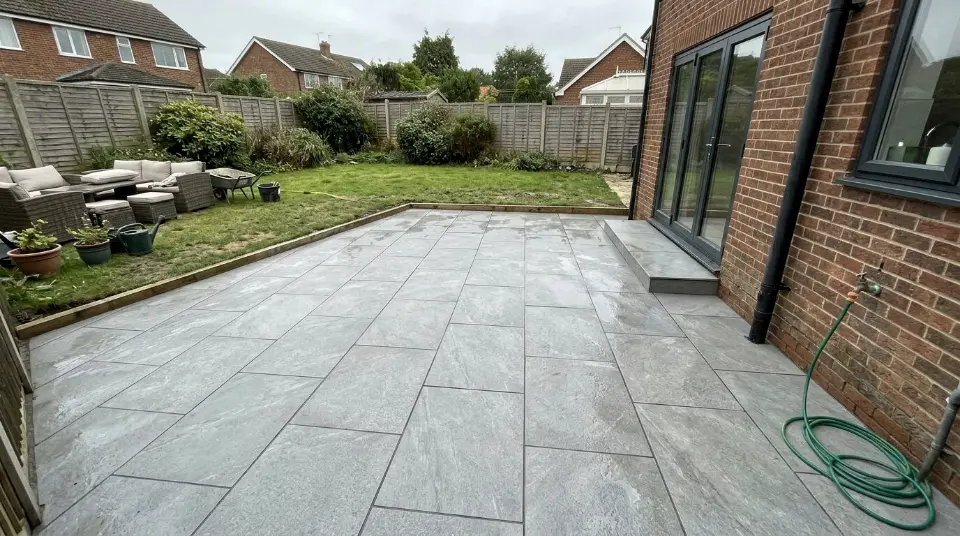
Porcelain, sandstone or natural stone
Porcelain is dense, does not stain easily and keeps its colour. It needs a priming slurry on the back of each slab and a cutting saw with the right blade, so it costs more to lay.
Indian sandstone has natural variation in colour and a riven or sawn finish. It is usually the lower cost option, and benefits from sealing.
Granite and limestone sit at the top of the range for both price and weight.
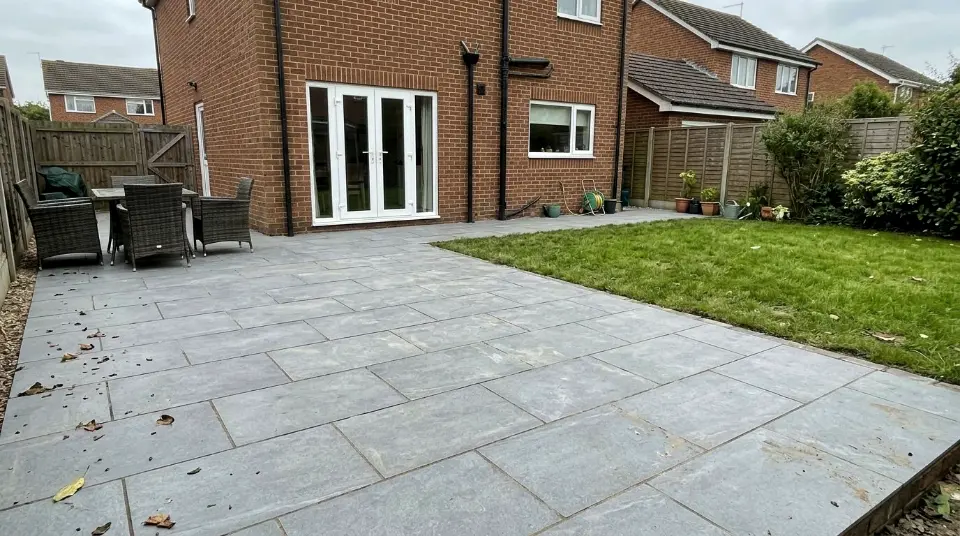
What a patio costs
Typical installed prices from the BestBuilders landscaping guide, last updated 6 September 2026.
| Patio | Per m² | Typical 25 m² patio |
|---|---|---|
| Indian sandstone | £70 to £140 | £1,800 to £3,500 |
| Porcelain | £100 to £180 | £2,500 to £4,500 |
| Natural stone (granite or limestone) | £130 to £230 | £3,200 to £5,800 |
The parts you will not see
Set out
Mark the area, agree the finished level against the damp proof course and set a fall away from the house.
Dig and base
Excavate, then compact a crushed stone sub-base so the patio does not settle unevenly.
Full bed
Lay each slab on a full mortar bed. Porcelain slabs get a priming slurry on the back so they bond.
Joints and finish
Point the joints, with a jointing compound or mortar to suit the stone, and clean down.
Patio questions
How much does a patio cost in Southampton?
Typical installed prices from the BestBuilders landscaping guide are £70 to £140 per m² for Indian sandstone, £100 to £180 per m² for porcelain and £130 to £230 per m² for natural stone. A typical 25 m² porcelain patio is £2,500 to £4,500.
Is porcelain or sandstone better for a patio?
Porcelain is dense, stain resistant and keeps its colour, but costs more to lay. Indian sandstone has natural variation and a lower cost, and benefits from sealing. It comes down to the look you want and the budget.
Does a patio need to slope?
Yes, slightly. A gentle fall away from the house lets rainwater run off rather than pool or run towards the walls.
How high can a patio be against the house?
It should finish below the damp proof course, so rain splashing off the patio does not bridge it. This is set at the start of the job.
Why are patio slabs laid on a full bed?
A full mortar bed supports the whole slab, so it does not rock or crack. Slabs laid on a few dabs of mortar leave voids underneath.
Do I need planning permission for a back garden patio?
Patios in back gardens are generally permitted development for houses, subject to limits. Listed buildings, flats and some protected areas have different rules, so check with your council if that applies.
Price your patio
Send the quick form and choose Not sure for the surface. Mention the rough size and the stone you have in mind in the next step.